
Transcript
[00:00:00]
(ADVERTISEMENT)
Transition: Gentle, trilling music with a steady drumbeat plays under the dialogue.
Promo: Bullseye with Jesse Thorn is a production of MaximumFun.org and is distributed by NPR.
Music: “Huddle Formation” from the album Thunder, Lightning, Strike by The Go! Team—a fast, upbeat, peppy song. Music plays as Jesse speaks, then fades out.
Jesse Thorn: It is Bullseye. I’m Jesse Thorn. Our next guest this week is Yahya Abdul-Mateen II. He’s an actor. He didn’t book his first part until he was almost 30. Before that, he worked in San Francisco as a city planner, and for somebody who’s been acting for less than ten years, he has been a lot of superheroes and supervillains.
He was an Aquaman as Manta, an evil pirate. In 2019, he was Dr. Manhattan in the Watchman series. Definitely a show to check out if you haven’t; that role earned him an Emmy. Now he has the title role in the new Marvel series Wonder Man. Sort of. When the show begins, Abdul-Mateen is Simon Williams. He’s an aspiring actor with a chance to book the biggest part of his life: the lead role in a big-budget, prestige Hollywood production called Wonder Man. The twist is that Williams himself has superpowers—something that he has to hide at all costs. It’s a fun show, right? Good premise. Interviewing Yahya is our friend and correspondent jarrett hill. Let’s get into it.
Transition: Bright, jazzy synth.
jarrett hill: Yahya Abdul-Mateen II, welcome to Bullseye.
Yahya Abdul-Mateen II: Thank you for having me.
jarrett hill: Absolutely. How do you prepare yourself for press runs? I feel like all of my friends who are actors have different ways of engaging with doing media and press and things one after another after another. How do you prepare yourself for that?
Yahya Abdul-Mateen II: I try to keep my life very quiet. Right? And so, what I’m working on right now is to bring that calm and quiet into the press run. It’s hectic for me sometimes. You know what I mean? But I’m trying to do—trying to switch it up so that it doesn’t have to be hectic. You know, I do have places to be; I got, you know, people to talk to and things like that. So, I gotta stay sharp. But it does not have to be hectic. It can be as cool, as calm, as collected as I want it to be, but I have to be that first. So, I try to keep my world quiet. That’s really the thing for me right now. And I try to take that calm and that quiet into the rooms. And so, that’s how I’m working right now.
jarrett hill: I heard you say this in interviews, that you—I think the words you used were “I learned.” “I’ve learned how to introduce calm and quiet into my life.”
Yahya Abdul-Mateen II: Mm-hmm. Something like that. Yeah.
jarrett hill: Which says something to me that it wasn’t always calm and quiet, and that you found something that’s doing that for you. What does that look like?
Yahya Abdul-Mateen II: Not centering my life around my work, you know? Stepping back and understanding that I’m talented enough to disappear. I don’t have to be seen; I don’t have to be at all the events; you know, I don’t even have to be on your television screen or on the big screen in the movie theater. I don’t have to be in front of your face in order to be remembered. You know what I mean? So, that’s just really trusting that like, whenever it’s time for me to show up, that there’ll be a space for me to do that, a space for me to perform, and I don’t have to chase it.
So, when I’m not doing that, then I get to do what I want to do in my own personal life and get a life. You know what I mean? About five years ago, four—about four years ago, I just start reminding myself to get a life. You know, I spent a lot of time dedicating myself to the craft, pursuing this thing that had become a dream. And then once I began to work and be began to show that I can get a job, then I had to remind myself that, “Hey, you had a life before this. So, make sure that you don’t make this your life.” That takes some practice.
jarrett hill: Does your quiet and calm include like meditation or prayer or walking or exercise? I’m imagining fitness; you’re a superhero.
Yahya Abdul-Mateen II: Yeah. Uh—(chuckles warmly), sure. It includes all of those things. But it starts up here. It starts in my mind and letting go of the things that cause noise. And you know what helps is just keeping it all in perspective. You know what I mean? Keeping it all in perspective and not buying into the hype, not buying into my own hype. You know? Making sure that I— Like, I knew who I was before I started doing this.
[00:05:00]
I still know who I am. And that keeps me able to be, you know, a regular Joe.
jarrett hill: One of my favorite books is The Four Agreements. And they’d say to never take anything personally. And one of those things they say, like the praise and the criticism. And the not buying into your own hype piece is interesting. ‘Cause there is a part of you that has to buy into it to a degree to be able to do all this. Right?
(Yahya “mm”s uncertainly.)
But then there’s more of it that’s “Eh, but I know what’s real.” Right?
Yahya Abdul-Mateen II: You said, “But I know it’s real?”
jarrett hill: I know what’s real.
Yahya Abdul-Mateen II: I know what’s real. Yeah, yeah.
jarrett hill: “I see what’s real, and I know what is hype.”
Yahya Abdul-Mateen II: Yeah.
jarrett hill: How do you think about that distinction?
Yahya Abdul-Mateen II: You know, I used to do this thing when I felt down or when I didn’t feel confident. And it wasn’t in acting; it was always in other areas of my life. It’s been a while since I’ve done it, but I would just— I would pull up my resume, and I would just read my resume.
jarrett hill: Yes!
Yahya Abdul-Mateen II: Just to remind myself of who I am. I was like, “Oh yeah, I did do that! Oh yeah, I did do that. That’s right. I did.” And everything on it was true. You know, my professional resume. My acting resume may have had a little fluff on it when I was trying to come up. You know what I mean?
(jarrett chuckles softly.)
But my professional resume, I read everything; I’m like, “Yeah, all of this is true. Hey, you can do it.” You know? So, I always look back; I always look toward myself to remind myself— Or in other words, I always try to look inward to remind myself of what it is that I’m made of and things like that.
And the other thing is that you gotta be real careful of receiving—of building oneself up based on the things that other people say. ‘Cause you know, if they can build you up, they can also tear you down. I don’t want to ever put my fate in anybody else’s hands in that way, you know?
jarrett hill: Receive that. I receive that. I paint. I’m an artist.
Yahya Abdul-Mateen II: Oh yeah?
jarrett hill: Yeah. And I had, on my wall in grad school— I just moved back to Los Angeles from grad school. And on my wall, there was this huge mural that I did that was essentially my resume. I didn’t get my security deposit back. But! (Chuckles.) I painted this huge thing, and it was a big reminder to me of the things that I’ve done. Right? And so, as I hear you talking about your resume being able to kind of remind you, I’m reminded that you turned 40 this year.
Yahya Abdul-Mateen II: Mm-mm. Not yet.
jarrett hill: You’re about—you’re going to.
Yahya Abdul-Mateen II: Oh, I will. Yeah, yeah, yeah.
jarrett hill: You’ll turn 40 this year. I’m curious—as you’re approaching 40, I imagine there may be some things that you’re kind of reflecting on ten years into and since, you know, your first big show and things like that. What parts of you do you feel like are shifting and changing and evolving as you’re approaching 40?
Yahya Abdul-Mateen II: I’m trying to implement the things that I’m learning, you know? I think one of the differences between myself this year and even within the last year, maybe, is that I’m always in the state of learning. Right? I think that’s just— I’m mentally stimulated by new information, useful information, and trying to figure out what it is that I’m made of and what’s going on in the world. What does it all mean? How is it all coming together?
But what I’m doing a better job at these days is applying what I’m learning. And that’s where I think real growth happens. A lot of that is spiritually. A lot of that is reflecting on personal relationships, family relationships with an empathetic perspective. And making the change. You know, making the necessary changes to be more kind, to be more understanding, to correct my wrongs. You know. And really doing… it’s like doing what I know is right. You know? Doing it. Not just knowing what’s right. You know? Sometimes— It’s like sometimes you know what’s right, and then you learn a new right. You know, you have a revelation, and you have a— So, then you have to shift. So, now it’s not good enough to just know. You gotta do it.
(jarrett agrees.)
And then once you do it, you gotta do it again. So, the application is the application of what I’m learning. That’s how I’m growing right now. But I also feel like that growth is exponential because of that. You know, because I’m applying what I know. A lot of people sit down on podcasts—you know what I’m saying?—and they just know things. They know all the facts. They got all the phrases, all the catchphrases, all the ideas, all the quotes, all the philosophies. And they know them, and they know them, and they know them. But to apply them? That’s a different thing.
Jesse Thorn: We’ve got so much more with Yahya Abdul-Mateen II still to come. Stay with us. It’s Bullseye for MaximumFun.org and NPR.
(ADVERTISEMENT)
[00:10:00]
Transition: Chiming synth with a syncopated beat.
Jesse Thorn: It is Bullseye. I’m Jesse Thorn. Our guest is actor Yahya Abdul-Mateen II, the star of the new Marvel TV show Wonder Man. He’s being interviewed by our correspondent, jarrett hill.
jarrett hill: I’m not like a Marvel superfan. I haven’t seen all of the things. I don’t know all the connections between the this and the that. And so, I was coming into this show like, “I wonder how much I need to know before coming into this.” And I will say, I pretty quickly was rooting for Simon.
Yahya Abdul-Mateen II: Oh, cool.
jarrett hill: Even though (chuckling) he’s frustrating to watch in certain kinds of ways. Like, what are you doing? Why would you do that? But I also found myself rooting for him really quickly and excited to watch his journey through the season of the show. And I’m curious. When you first saw this character, how did it speak to you? What were you seeing in Simon that was exciting to you or opened up something for you that you wanted to be a part of?
Yahya Abdul-Mateen II: Yeah. Well, it wasn’t— Admittedly, it was not about Simon. It was about Destin. Destin Cretton. Fantastic director. I saw Short Term 12. I think that may be his first film. And I saw Just Mercy, with Mike B. and Jamie Fox. And I really liked— I liked his filmmaking. And I also had a meeting with him, and he just seemed like a cool, chill dude. So, for me, this was a chance— You know, I thought Marvel does things with a lot of class and they look like they have a lot of fun. I was working over on the DC side.
And so, I had wanted— I had been an admirer of Marvel for a while. And when I got the opportunity and Destin was at the helm of it, I said, “Okay, okay. You know, I think that this could work.” And then when it came to Simon, that was just me reading. I said, “Okay, he’s an actor. He’s got some neurotic things going on.” But really, I’m gonna be honest, Simon was the laaast piece of the puzzle. Simon just happened to be the job. You know? Simon just happened to be the job, and I read it. But as I got into it, then I started to see other things about Simon’s loneliness; Simon’s need to be seen; Simon really needed a friend. I saw how much he cared. I saw how passionate he was.
What I eventually got into was figuring out how to make Simon charming and also charismatic. How to present him as someone who did have confidence, but at the same time, there was a certain aspect of his life where he was just absolutely unsure and unstable and insecure. So, it was really the further I got into it—into the scripts—that I found what I really liked about playing Simon. And eventually, it just boiled down to, “Oh, he’s just a dude with a dream.” I understand that.
jarrett hill: Mm. I often find that actors, the work that they’re doing—especially if it’s work that is taking a lot of their time—the work tends to have some kind of reflection in their life. That it might show up in some— They’re dealing with something that their character is dealing with. Or there’s an event that has happened in your real life. Was there any of that with Simon? ‘Cause it seems like you see yourself and Simon as quite different. But were there things in this show that really connected as, “Wow, this is something that I’m really—I really feel connected to?”
Yahya Abdul-Mateen II: Mm-mm.
jarrett hill: (Surprised.) No?
Yahya Abdul-Mateen II: I mean, I love acting.
jarrett hill: Interesting!
Yahya Abdul-Mateen II: I love acting. I love it in a different way than Simon. I think Simon really loves himself in the work. I like the work and most of the things that I’m extremely passionate about, that I really love about acting, no one will ever see. You know? It’s the stuff that I’m working on from ten years ago. Where like, there’s a monologue that I learned 10/12 years ago that I’m still working on.
But no, not really. And I didn’t take Simon home. Check it out. In order to— We all—whatever I show, it comes from the—it does at some point come from within. You know. Because it is me playing a character. So, I did find the parts of me that deals with anxiety, the parts of me that deals with doubt—you know, stress and things like that. But I never brought it home or really found parallels in my own real life.
[00:15:00]
I mean, as an actor—man, I’m extremely blessed. I’ve had a really rich, favored journey once I decided to pursue this. And Simon’s working for it.
jarrett hill: Nice. I have a friend who’s like a sister to me who directed on Wonder Man.
Yahya Abdul-Mateen II: (Overlapping.) Was it Tiff?
jarrett hill: (Overlapping.) Her name’s Tiffany Johnson. Yeeeah!
Yahya Abdul-Mateen II: Oh yeah! She was cool. Tiff was cool.
jarrett hill: (Chuckles.) Yeah, she— I called her. I was like, “I don’t feel like I see a lot of things about Yahya,” as far as what it’s like to interact with you or be with you. And so, I was like, “Talk to me about your experience with him.” And like the first—
Yahya Abdul-Mateen II: What’d she say?
jarrett hill: We’re all Californians. And so, I felt like we were using very Californian language. But she was like, “Yo, yo, he’s dooope! He’s a real person!”
Yahya Abdul-Mateen II: (Laughing.) I’m a real person!
jarrett hill: “He’s a real person!”
Yahya Abdul-Mateen II: Yeah. Yeah. I try to be. I hope so.
jarrett hill: As I wrote down “real person,” I’m like, “I love that I know what this means.” Right?
(Yahya agrees.)
It’s in the notes. It’s like, “(Muttering.) What do you mean he’s a real person?”
But she said that you’re serious, but you can still have fun. That you are a family person. She remembers your mom being on set one day and getting to call action.
Yahya Abdul-Mateen II: Yeah, yeah, yeah! My mama—yeah, my mama talks about that all the time.
jarrett hill: Really?
Yahya Abdul-Mateen II: Yeah. “That’s the place where I called action and CUUUT! CUT!” (Chuckling.) She said it like that. “CUUUT!”
jarrett hill: (Laughs.) What is that like for you to be able to have your mom come and have those experiences that stay with her?
Yahya Abdul-Mateen II: Man. That’s the dream, man. That’s what’s real cool is that my mom gets to come to set and— You know, my mom has those dreams. She’s very young at heart, you know what I mean? For her to be able to come to set and to see what it is that I do, and then participate at the level of being able to call action to cut— Who gets to call action and cut on a television set? You know what I mean? So, that was— Man, that meant a lot, you know, to be able to—yeah.
jarrett hill: Yeah. I love that. Tiffany also referred to you as a “good dude.” Which I think is really highly speaking of a person. Right?
(Yahya agrees.)
Especially when you talk about the people that we work with in this industry. And I’m curious about how do you think about showing up as a good person day-to-day on set? I feel like we’ve heard all kinds of stories about all kinds of different people. How do you think about that?
Yahya Abdul-Mateen II: Yeah. I haven’t had to think about it much, because I’ve had a great example. Hugh Jackman was an excellent example of how to show up every single day. Super prepared with gratitude, respect, kindness. He respects himself; he respects the process. He works really, really hard. He knows everybody’s name. He knows eeeverybody’s name. So, I saw him, and I’m like, “Okay, cool. That’s how you do it.” Dwayne Johnson, you know, works hard; work ethic is crazy. A leader on set. Jason Momoa , you know. He showed me a different way to do it. He showed me how to be a leader on set, how to take up space, how to ask for what you need. And he rose with his family too. You know, so I thought that that was cool. Regina King, being that consummate professional; you know, not having an ego, always being prepared. Sir Ben Kingsley, always being prepared. (Claps once.) Respecting his colleagues, respecting his own personal space. Knowing how to make sure that you get your own personal space without belittling anybody else. You know, I’ve had nothing but great examples for how to be on set, and I try to do the same thing.
Jesse Thorn: We’re gonna take a break. When we come back more with jarrett hill and Yahya Abdul-Mateen II, who fantasizes about leaving the big city to go work on a farm. What kind of farm and why? Well, we’ll get into it. It’s Bullseye for MaximumFun.org and NPR.
(ADVERTISEMENT)
Transition: Thumpy synth with a syncopated beat.
Jesse Thorn: Welcome back to Bullseye. I’m Jesse Thorn.
[00:20:00]
Our guest is Yahya Abdul-Mateen II. He is an actor who has appeared in films like The Trial of the Chicago 7 and Aquaman. He won an Emmy for his role in 2019’s The Watchman. These days, you can catch him in Wonder Man. It’s a TV show in which Abdul-Mateen plays a struggling actor with secret superpowers who is starring in a movie in which he plays a superhero. He’s being interviewed by our friend and correspondent, jarrett hill. Let’s get back into their conversation.
jarrett hill: I was looking at your work. And I was talking about, even for myself, like turning 40 and kind of like reviewing where I am in my life at this point; and kind of like seeing like, “Oh, there’s some themes here.” I wasn’t like, “Oh, I want all my work to do this,” but there are some things that have been consistent.
How do you think about the story that you’re telling throughout your characters? And I don’t know if there’s always a central story that you’re telling, but like how do you think about like the stories that you’re telling and what you’re putting into the world?
Yahya Abdul-Mateen II: (Sighs.) I think about that every once in a while. I would like for that to be my story, admittedly. I would like for the work to tell a more cohesive story. I feel like right now, the work says that I can act. The work says that I can get a job. But you know, I also have a production company. It’s called House Eleven10. And that’s really designed for me to be able to curate a conversation and to tell more specific stories with a throughline that really comes from the core of who I am on the inside. You know.
So, that’s a great question. And I am thinking about those things with the work that we put out through the company, then the threads will—you know, then the dots will really start to connect to tell—I think—a more cohesive narrative.
jarrett hill: How do you think about what you want to be saying? I don’t know if you have a whole vision of that yet, but how do you think about what you wanna say and what you don’t wanna say?
Yahya Abdul-Mateen II: Oh, it’s just really my taste.
jarrett hill: Yeah?
Yahya Abdul-Mateen II: You know. And so, I gravitate towards what I like. I think what I like is the best. You know> I make what I wanna make for an audience of one, which is for myself. And then I believe that, because I have something that is—I believe I’m not the only person who feels the way that I feel. I mean, I’m having this human experience. Well, then if I put it out—if I’m make it for myself and I put it out, somebody out there will relate to it. And if one other person relates to it, then mathematically like two people will relate to it. And so on and so on and so on, until you just might find out that you found something that’s extreeemely human that many people relate to. And now we’re talking about dollars, but we’re also talking about being able to build a more global conversation—you know what I mean?—around the work.
But to me, it all starts with that audience of one. I don’t like the idea of creating for a general audience, or creating for these people, or creating for those people. I create for myself. And because I am who I am, if I represent my own taste in the work, then other people who have commonalities with me—whether that be cultural or just human—you know, then they may relate to it also. But the themes? The themes tend to be love. I’m a sucker for a good love story. I’m also recently interested in like prison. I’m also recently interested in sci-fi and dystopian, you know, worlds and people trying to find the free world—like, breaking out of the everyday mundane reality into some type of freedom. Yeah.
jarrett hill: The last thing I wanna ask you here: I know for myself, one of the things that’s changed is how I measure success.
Yahya Abdul-Mateen II: Mm-hmm.
jarrett hill: And that success does not always mean the same things for me as it did before or it is not the same thing as everyone tells me that it needs to be.
Yahya Abdul-Mateen II: Yeah.
jarrett hill: How are you measuring success for yourself at this point, ten years into this career that we’ve seen in this public-facing way?
Yahya Abdul-Mateen II: You know, I’m gonna sorta shoehorn an experience into that question. I won an Emmy in, I think, 2020? Yeah. I think it was in 2020. And that is five years into my professional journey, and I think maybe three-and-a-half years into anything that I’ve done coming on the screen—or appeared on the screen. And I’m so grateful that it happened at that time, because it did not make me happy. At all.
(jarrett hums in understanding.)
It didn’t do nothing for me on the inside. And so, that’s when I learned. I learned very early that no accolade or anything like that will every give me happiness on the inside.
[00:25:00]
So, very soon I had to shift! And not to say that was my focus, but I learned. So, once I learned, I had to accept what it was that I learned, and I had to make the primary goal something else. So, in my own work—in terms of success—I want to be able to work with people who I enjoy working with on material that I enjoy working on. That sounds like an amazing career to me. And to not be limited. But if I enjoy it, then I’m assuming that I’m not limited creatively. That sounds like success. I also want to exercise that or to experience that as a writer; I wanna experience that as a director; and I want to experience that as a producer.
Overall, what I want to be able to do is to be somewhere on my farm and to cut my phone off for however long I want to. That’s it right there.
jarrett hill: I’m not asking another question, ’cause I already asked my last question.
Yahya Abdul-Mateen II: Alright.
jarrett hill: But like this farm that you see— Just say a little bit more about that. That’s interesting.
Yahya Abdul-Mateen II: (Playfully.) See, now you’re asking too many questions.
jarrett hill: It is not a question!
(Yahya cackles.)
It was just a statement, a follow-up at the end.
Yahya Abdul-Mateen II: Nah, it’s just the idea for how I wanna live, man. I visited the Soho Farmhouse out in London a couple years back. And soon as I got on those grounds, I was like, “Oh, this is how I wanna live.” And every time I get out in nature and on farms, it keeps on—that feeling comes back. And I’m like, “Oh, wow. It’s true. This is actually how I want to do it. Okay.” So, now it’s about having the courage to go and live a different way. You know, I’ve always been in the city. You know what I mean? So, that’s something that I want to—that I’m putting out there and stepping closer to.
jarrett hill: Alright! Alright. Maybe we’ll pull this clip back up in 10 years/15 years. Maybe someone’ll have it.
Yahya Abdul-Mateen II: Oh yeah, I might have it. Yeah.
jarrett hill: And you’ll be out on the farm?
Yahya Abdul-Mateen II: Oh yeah. Oh yeah. If you can reach me!
jarrett hill: Okay. Okay! (Laughs.) Alright.
Yahya Abdul-Mateen II: Yeah. Thank you very much.
jarrett hill: Yahya Abdul-Mateen II, thank so much for being on Bullseye.
Yahya Abdul-Mateen II: I appreciate it. It’s a pleasure. Yeah.
jarrett hill: Absolutely.
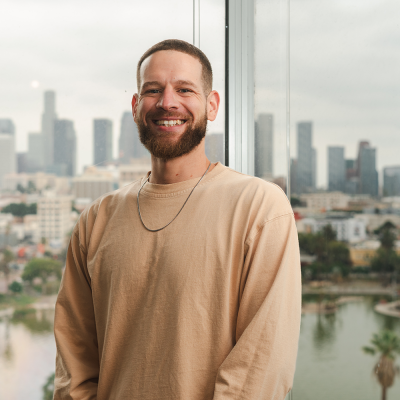
Jesse Thorn: Yahya Abdul-Mateen II, everyone. You can watch Wonder Man on Disney+ right now. It is very fun. If you haven’t seen his performance in Watchman, you should. He’s great in it. Our thanks to correspondent jarrett hill for talking with Yahya. jarrett also co-wrote the book Historically Black Phrases with his friend—our friend!—Tre’vell Anderson. It’s a terrific book.
Transition: Cool, jazzy synth.
Jesse Thorn: That’s the end of another episode of Bullseye. Bullseye, created from the homes of me and the staff of Maximum Fun—as well as at Maximum Fun HQ in the historical jewelry district in downtown Los Angeles, California. Although, for the last ten days, I have been in the Federal District of Mexico, Mexico City, where I just ate like a true maniac—just shoved food into my mouth like I was never guaranteed to see food again.
Our show is produced by speaking into microphones. Our senior producer is Kevin Ferguson. Our producers are Jesus Ambrosio and Richard Robey. Our production fellow at Maximum Fun, Hannah Moroz. Our video producer is Daniel Speer. We get booking help on Bullseye from Mara Davis. Our interstitial music comes from our pal, Dan Wally. He’s also known as DJ W. You can find his music at DJWsounds.bandcamp.com. Our theme music was written and recorded by The Go! Team. It’s called “Huddle Formation”. Thanks to The Go! Team. Thanks to their label, Memphis Industries, for providing it to us.
You can follow Bullseye on Instagram, TikTok, and YouTube, where you will find video from just about all our interviews—including the ones you heard this week. I think that’s about it. Just remember, all great radio hosts have a signature signoff.
Promo: Bullseye with Jesse Thorn is a production of MaximumFun.org and is distributed by NPR.
(Music fades out.)
(ADVERTISEMENT)
[00:30:00]
About the show
Bullseye is a celebration of the best of arts and culture in public radio form. Host Jesse Thorn sifts the wheat from the chaff to bring you in-depth interviews with the most revered and revolutionary minds in our culture.
Bullseye has been featured in Time, The New York Times, GQ and McSweeney’s, which called it “the kind of show people listen to in a more perfect world.” Since April 2013, the show has been distributed by NPR.
If you would like to pitch a guest for Bullseye, please CLICK HERE. You can also follow Bullseye on Twitter, YouTube, and Facebook. For more about Bullseye and to see a list of stations that carry it, please click here.
Get in touch with the show
 @bullseye.bsky.social
 @bullseyewithjessethorn
People




How to listen
Stream or download episodes directly from our website, or listen via your favorite podcatcher!